The Monetary Policy Council is preparing for new decisions. Dr. Ludwik Kotecki warns the market

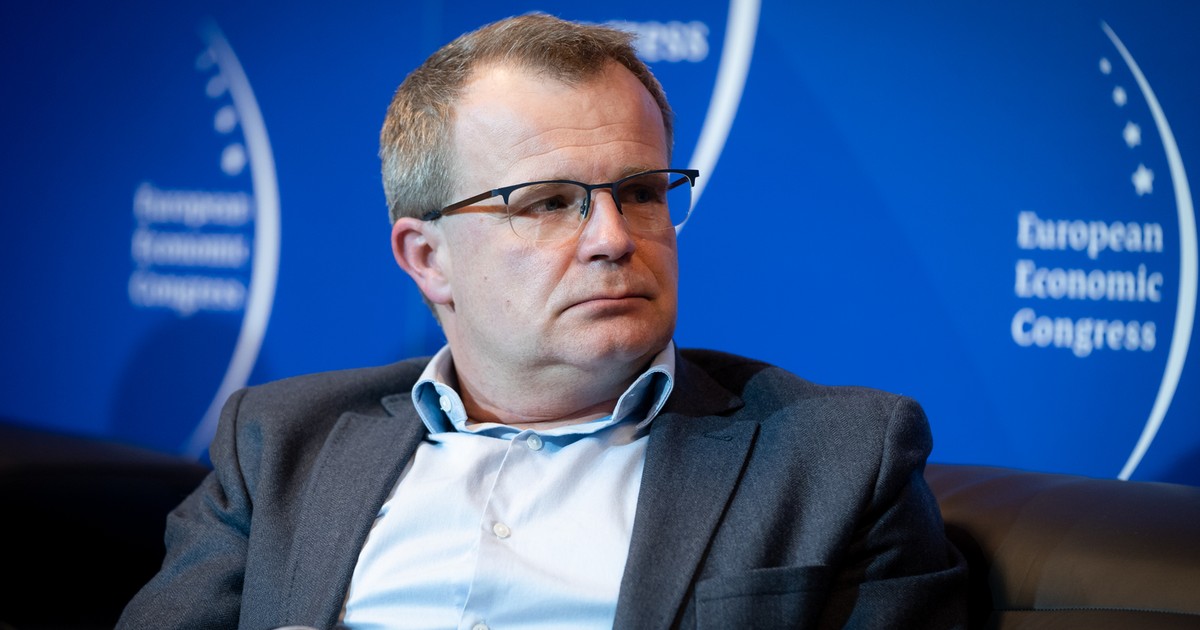
Monetary Policy Council, which includes, among others: president Adam Glapiński, Henryk Wnorowski and Iwona Duda, introduced a “wait-and-see” policy. As Ludwik Kotecki explains, this means a pause in activities to assess the effects of the current interest rate cuts.
The rest of the article below the video:
“It seems to me that we are closer to a scenario in which the pause is temporary and precedes further cuts, although the space for reductions is already very limited,” he admitted.
Kotecki recalled that Poland still has a relatively high real interest rate, both historically and compared to other central banks. He noted, however, that the December reduction was justified by the low inflation estimate for November, which amounted to 2.4 percent. year to year (later adjusted by the Central Statistical Office to 2.5%).
The market is too optimistic about interest rates in Poland
Ludwig Kotecki, in an interview with “Gazeta Giełdy Parkiet”, noted that the financial market is too enthusiastic about the prospects for further reductions.
“There are expectations of a reduction to 3%, but I believe they are exaggerated,” he said. In his opinion, a realistic scenario for next year is one or two more reductions, which may bring the main NBP interest rate to approximately 3.75%.
However, everything depends on key macroeconomic data. The Monetary Policy Council intends to wait for new data, including the March update of the Central Statistical Office's inflation basket and the National Bank of Poland's inflation projection. Kotecki pointed out that energy prices from January may be unpredictable, although their disinflationary impact is expected in 2026.
“A possible end to the conflict in Ukraine could also reduce the prices of energy raw materials,” he added.
However, not all factors favor a further decline in inflation. Kotecki believes that service prices may stay at the level of 4.5-5 percent, and the positive trend in food prices observed since summer may soon slow down. The strong zloty, which has supported disinflation so far, also no longer has much potential for further strengthening.
“The elephant in the room”, i.e. public finances
During the conference of the European Financial Congress, Ludwig Kotecki drew attention to the problem of high fiscal deficit and rapidly growing public debt in relation to GDP.
“Everyone knows that for political reasons the situation is very difficult and there is little that can be done about it,” he emphasized.
In his opinion, as long as Poland maintains solid economic growth and attracts EU funds, markets do not see any immediate threat. However, the lack of fiscal consolidation action could create problems in the event of an external economic shock.
Kotecki pointed out that tax reform could help organize public finances.
“The easiest thing would be to diversify the currently very low property tax more,” he suggested, adding that property taxes in Poland are among the lowest in the OECD.