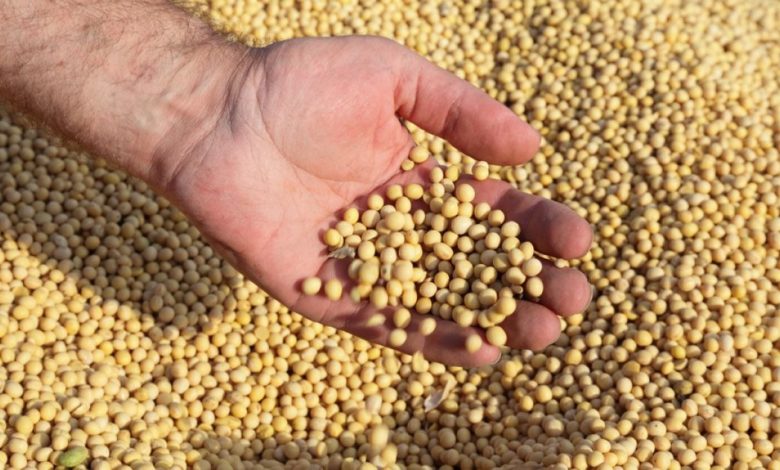
After decades in which he relied on massive soy imports from the United States, China rethinks its agricultural and commercial strategy. The increasing trade tensions between Washington and Beijing determine the world's most populated country to diversify its suppliers, and South America-especially Brazil and Argentina-are becoming more clear as the new epicenter of soy supply.
Far from being just an ingredient in Asian cuisine, soy is one of the most valuable cultures in the globe. With a high protein and fat content, it mainly feeds pigs and birds, being a central element in agro -industrial chains.
In this context, any imbalance in soy trade can have waterfall effects, both on American farmers and consumers in China. Last year, the United States exported over 27 million tons of soy, worth about $ 12.8 billion – the equivalent of 9% of total American exports to this country, writes The New York Times.
Customs rates change the rules of the game
But this commercial relationship is questioned. The new rates imposed by China, in reply to the taxes instituted by the Trump administration on Chinese products, increase the cost of US soy, 135%, making it significantly less competitive.
American farmers, already vulnerable to weathering, pests or mechanical faults, now feel the pressure of a commercial war that endangers their economic sustainability. “The rates are not something we could easily adapt,” says Heather Feuerstein, farmers in Michigan. “It is a threat to our way of life.”
Brazil, the main beneficiary
As the Chinese demand is reoriented, Brazil – the largest world exporter of soy – is preparing to supplement the goal left by the withdrawal of Americans. “If they cannot take from the US, they will take more from us,” says Neusa Lopes, executive within Girassol Agrícola, one of the largest agricultural companies in the state of Mato Grosso.
Brazil and Argentina produce together 52% of world soy, and China has been massively invested in the agricultural infrastructure of these countries. In the port of Santos – the largest in Latin America – was recently inaugurated a terminal of nearly $ 500 million, funded by the Chinese giant Cofco, intended for soy export to Asia.
A global stake race
For China, the diversification of supply sources is a matter of food security. Therefore, the Deputy Minister of Beijing Agriculture met this week with Brazilian officials, and President Luiz Ináio Lula Da Silva announced an official visit to China, in a visible effort to strengthen the bilateral relationship.
At the same time, American farmers are forced to continue the rotation of crops and look for alternative markets, in India, Egypt or Mexico. Although organizations like US Soybean Export Council try to open new export horizons, replacing the Chinese market is a long -term goal, by no means an immediate solution.
Previous and uncertainties
The US also went through such a stage during the first Trump administration. Between 2017 and 2022, China increased by 35% imports from Brazil and reduced the US purchases by 14%. And the tendency was not reversed. “If the rates are maintained, American exports will continue to be replaced by Brazilian ones,” says André Nassar, president of the Brazilian Association of Vegetable Oil Manufacturers.
The only temporary rescue for US farmers was a government aid program worth $ 23 billion. The current administration takes into account a new intervention, but it is unlikely to cover the losses entirely.
“The emergency aid was welcome, but it did not cover all the losses,” says Heather Feuerstein. “And, in essence, the most important export market destroyed us.”