Książ Castle, one of the largest in the country, delights with the richness of forms created over the centuries – from medieval elements, through baroque decorations, to modernization reconstructions. The long-time seat of the Hochberg family also hides a dark page of history – during World War II it was part of the mysterious “Riese” project. Today it impresses with its garden terraces and the extraordinary Palm House founded by John Henry XV.
The Wieliczka Mine is a unique complex of underground chambers and galleries in the world, in which salt architecture has achieved mastery. The greatest masterpiece remains the Chapel of St. Kingi – a space carved entirely in salt, including the altar, sculptures and chandeliers. This is proof that architectural wonders can be created even several hundred meters underground.
3. Philharmonic Hall M. Karłowicz in Szczecin – ice block from Barozzi Veiga
Completed in 2014, the building quickly became an icon of Polish contemporary architecture. The author of the design is the Spanish studio Barozzi Veiga, known for its minimalist and expressive forms. The soaring, “ice” silhouette of the philharmonic hall and the translucent façade create extraordinary lighting effects after dark. The facility was awarded the prestigious Mies van der Rohe award in 2015.
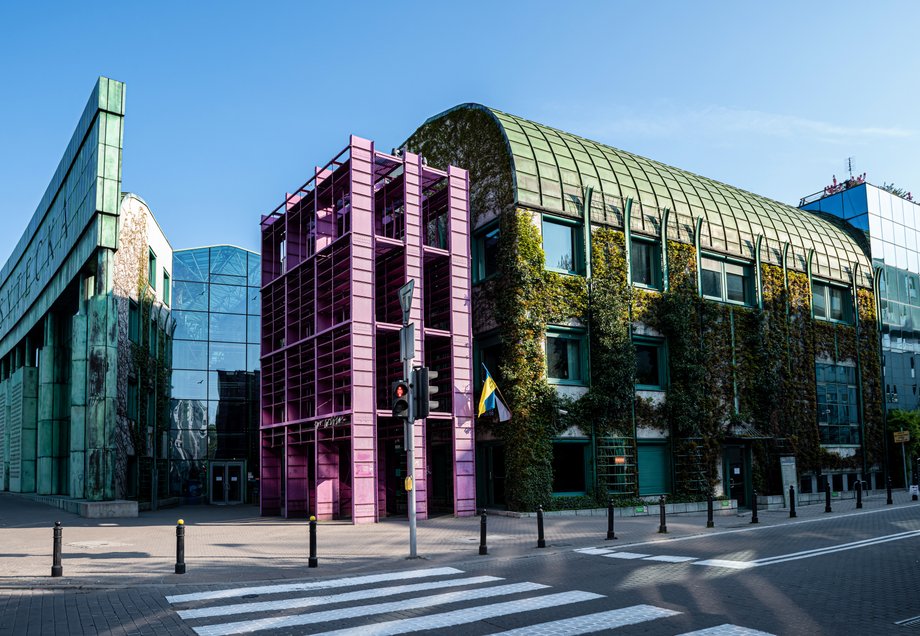
Library of the University of Warsaw
|
NitaYuko/Getty Images
4. University Library in Warsaw (BUW) – green architecture by Budzyński and Badowski
One of the most recognizable implementations of Polish postmodernism. The project was prepared by Marek Budzyński and Zbigniew Badowski, who combined architecture with rich greenery. The biggest attraction of BUW is its publicly accessible, multi-level roof garden – one of the most interesting in Europe. It is a place that combines scientific, recreational and educational functions, giving the residents of Warsaw a space for respite.
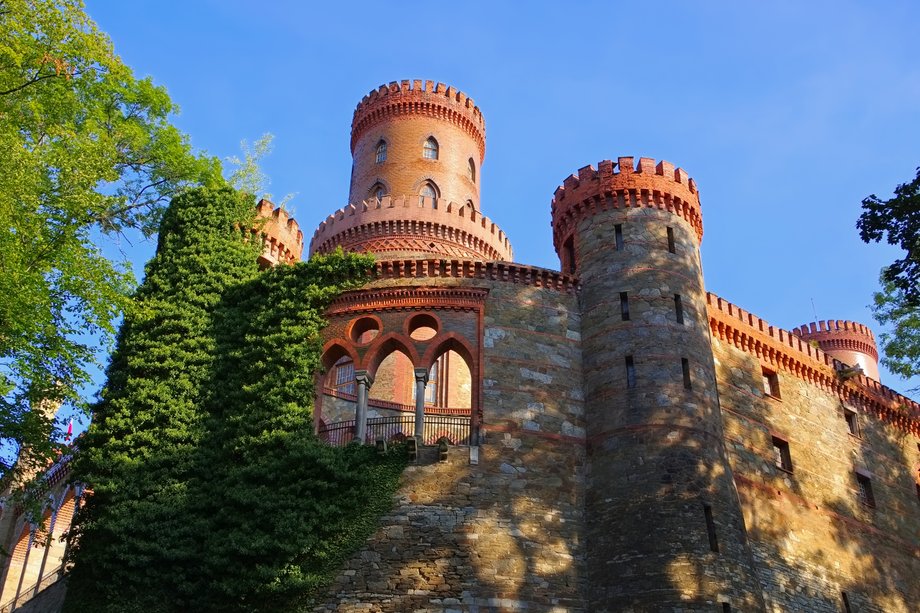
Marianna Orańska Palace (Kamieniec Ząbkowicki)
|
LianeM/Getty Images
5. Marianna Orańska's Palace (Kamieniec Ząbkowicki) – Neo-Gothic style straight from a fairy tale
The 19th-century residence of Princess Marianna of Orange is one of the most beautiful examples of European neo-Gothic architecture. The impressive palace with four towers and a huge terraced park was designed on a scale worthy of its royal founder. It fell into disrepair over the years, but today it regains its former glory, becoming a background for cultural events and a place frequently visited by tourists.
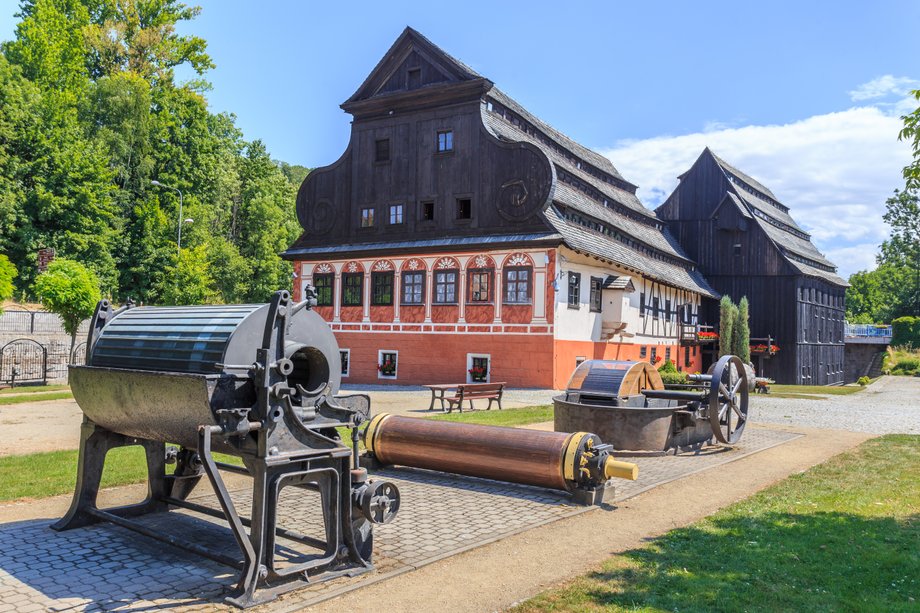
Papermaking Museum in Duszniki-Zdrój
|
Stepniak / Shutterstock
6. Museum of Papermaking in Duszniki-Zdrój – a pearl of industrial architecture
Today, the 17th-century paper mill houses one of the most valuable museums of technology in Poland. The wooden structure covered with shingles impresses with its authenticity and picturesque location. Visitors can not only see the original devices, but also make a sheet of handmade paper with their own hands.
See also:
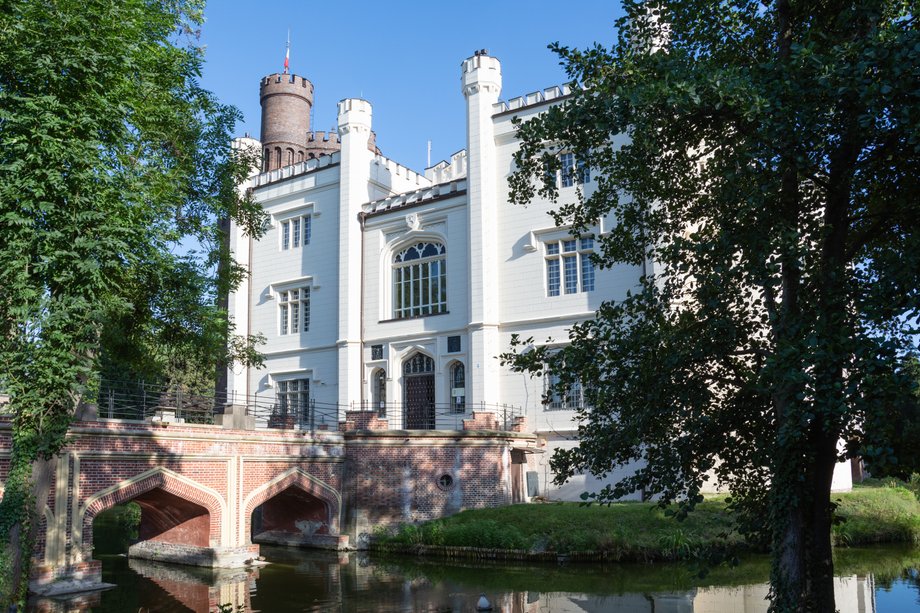
Castle in Kórnik
|
MarcinPapaj / Shutterstock
7. Kórnik Castle – neo-Gothic architecture and the legend of the White Lady
The residence, surrounded by a picturesque lake and one of the oldest arboretums in the country, attracts both history lovers and romantic stories. The 19th-century reconstruction gave the castle an English neo-Gothic character. The interior houses rich collections, and after dark – according to legends – the famous White Lady appears here.
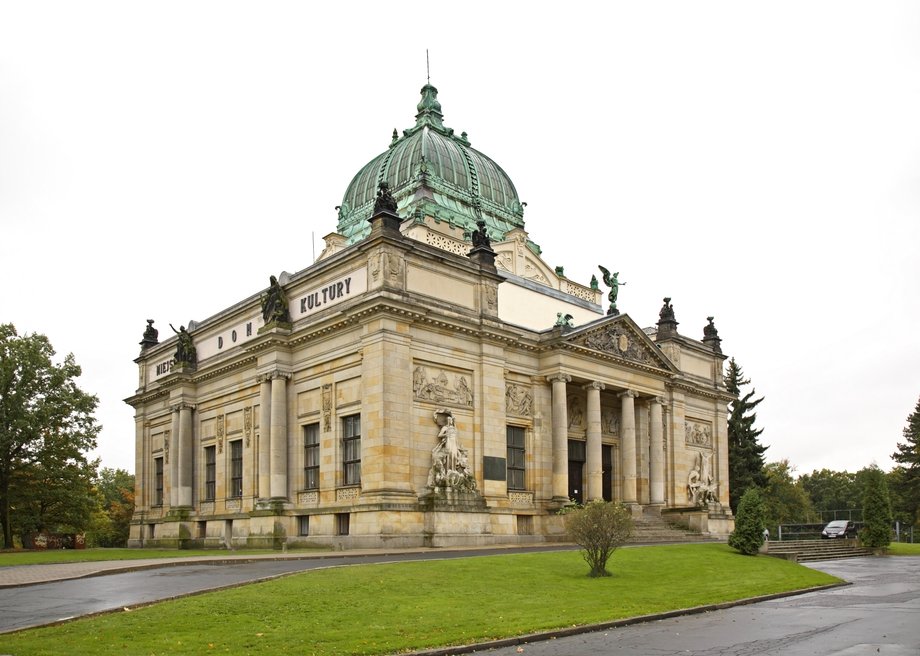
Municipal Cultural Center in Zgorzelec
|
Shevchenko Andrey/Getty Images
8. Municipal Cultural Center in Zgorzelec – a Lusatian pearl of neo-baroque
The former Upper Lusatian Hall of Fame, built at the beginning of the 20th century, impresses with its monumental dome, rich decorations and Art Nouveau details. Today it houses the Municipal Cultural Center, and its location right on the Nysa Łużycka River makes the building one of the most characteristic points of the city.
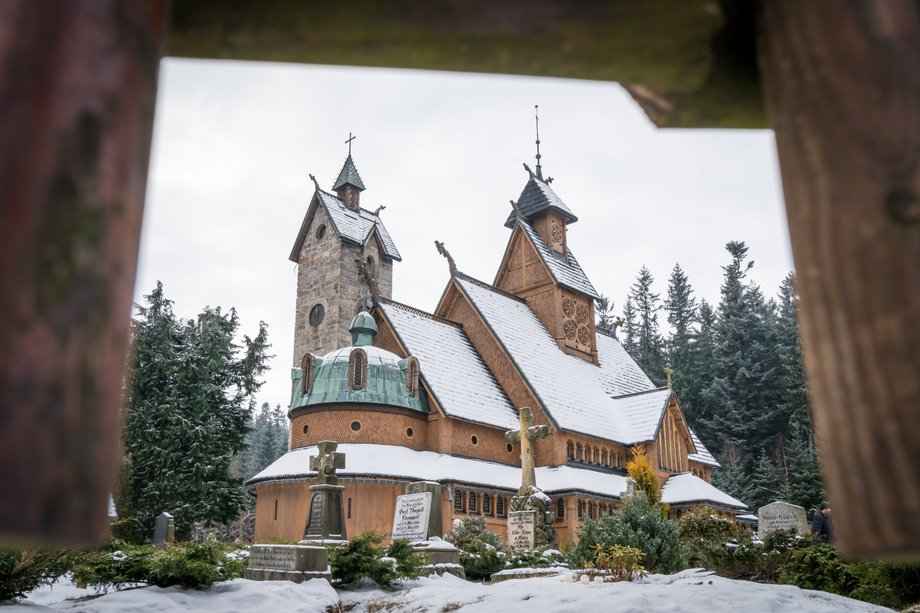
Wang Temple in Karpacz
|
pawopa3336 / Getty Images
9. Wang Temple (Karpacz) – a Norwegian stave church in the heart of the Karkonosze Mountains
This unique church from the 12th/13th century, made of pine logs without the use of nails, was imported from Norway in the 19th century. Decorated with motifs referring to Viking art, it still retains its extraordinary, Scandinavian character. It is unique on a European scale.
10. Wybrzeże Theater in Gdańsk – modernity intertwined with tradition
The renovated seat of the Gdańsk theater is an example of how modern architecture can emphasize the historical context of the surroundings. The simple shape and dark brick façade refer to the Gothic buildings of Gdańsk. The reconstruction project was appreciated by the architectural community and awarded the SARP award in 2024. (Depending on the stage of modernization, various design teams were involved in the implementation; the latest part was prepared by, among others, the Studio Kwadrat studio.)
Read also: The Polish premium hotel market is growing stronger. These investments will change the industry
An architect with gems
— As Renzo Piano notes: you can turn off bad music, put down a boring book or take a bad painting away from your eyes, but you can't “turn off” the buildingwhich grows in front of our window. And yet buildings last for decades, often for centuries – comments Szymon Wojciechowski (APA Wojciechowski Architekci).
The most important task of architects is to create objects that will stand the test of time – aesthetically, functionally and socially. That is why among the icons of architecture, buildings that have stood with us for dozens or hundreds of years dominate.
It is also worth noting that almost all examples from the list are objects of culture, worship or public utility. Meanwhile, most of the real architecture is the places where we live, work and shop.
— Maybe it would be worth adding residential, office or commercial buildings to the list? – wonders the architect. – For example, the Riverview housing estate in Gdańsk or the Powiśle Power Plant in Warsaw, which show that contemporary utility architecture can also be beautiful and valuable – he says.
The material was prepared in cooperation with Morizon-Gratka Group.