Incidents at European airports are a wake-up call. “Scary Thought”


Matt McCrann, CEO of the US branch of DroneShield, told Business Insider that in the US alone “there is a huge area to be secured” – from critical infrastructure and large gatherings, through public events, to objects of symbolic importance.
The number of potential targets is growing rapidly, extending far beyond war.
— We definitely need to expand our thinking when it comes to potential threats and how to defend against them – he said.
Read also in BUSINESS INSIDER
The use of drones in Russia's invasion of Ukraine — including indiscriminate bombings targeting both civilian and military infrastructure — has alarmed the West, showing what future wars might look like.
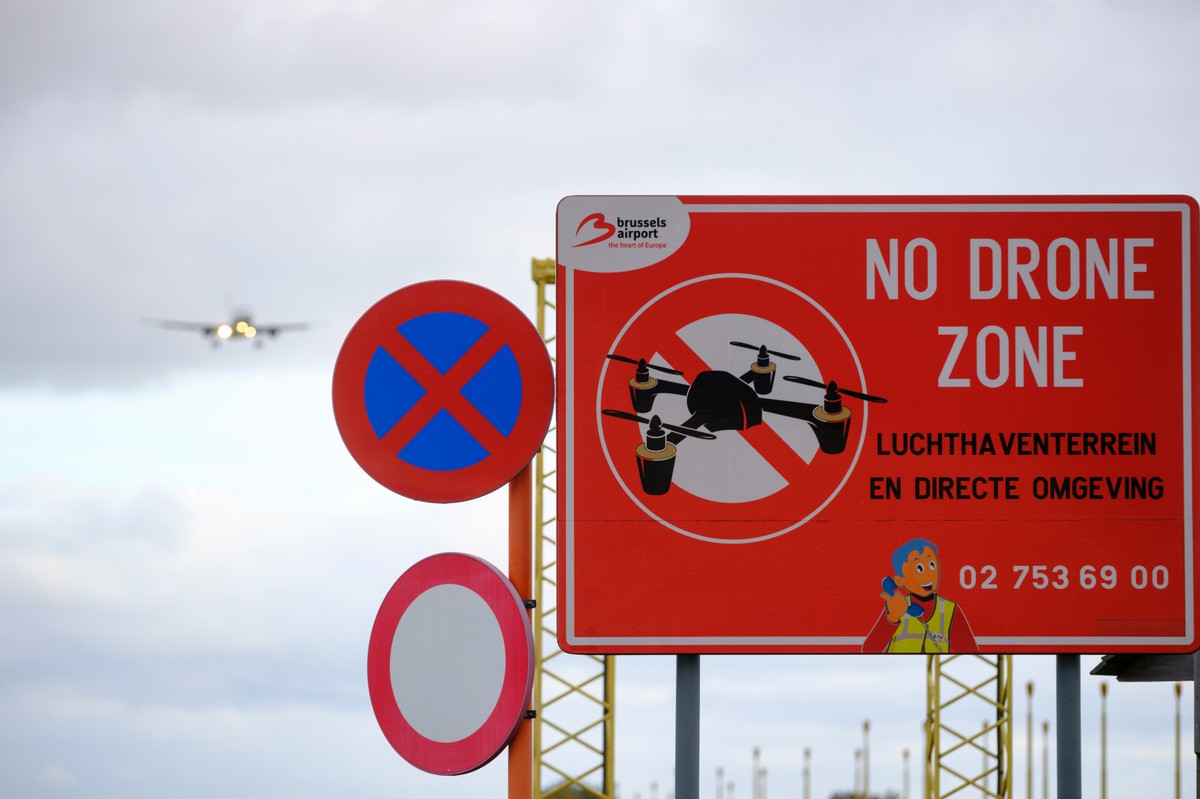
And concerns are only growing, even outside of active conflicts, as more Russian and unidentified drones violate European airspace, fly near military bases and disrupt civilian facilities such as airports. Hundreds of drone incursions over military facilities have been reported in the US.
DroneShield, an Australian company also operating in the US, produces anti-drone technologies that detect, track and disrupt drones by jamming their radio links – and demand for these technologies is growing. The company has multi-million contracts with the American military and a number of systems used in Ukraine.
McCrann said “vigilance about drones and the threats they pose” to airports, critical infrastructure, energy and data centers and sporting events is growing by the week. The awareness that defenses against drones are inadequate is “gaining momentum,” he added.
The drone threat is real
In Europe, where DroneShield is expanding, drones are becoming a serious problem. Incidents include Russian drones entering Polish airspace – prompting NATO's F-16 and F-35 fighters to respond – and repeated sightings near military bases in the north. In some countries, airports have been repeatedly disrupted by drones flying nearby.
McCrann pointed out that the problem is also visible in incidents around large sporting events in the USA. The NFL reported 2,537 unauthorized drone flights over games in 2022 and 2,845 in 2023. Many of them caused disruptions.
He said that “Every two weeks there are at least two matches during which a loud drone flies over the 70,000-seat stadium and no one knows where it's coming from or what its intentions are.”
There hasn't been a major incident yet, McCrann said, but it may only take one ill-intentioned drone for the threat to become obvious. Hopefully this doesn't happen, he added, but drones have already collided with helicopters, forced rescue aircraft to land and grounded planes at airports for many hours.
Often, it takes a major warning signal to lead to real investment, he said, but people are beginning to recognize the risk and urgency of the situation, and budgets are increasingly aligned with policies and technological opportunities.
See also: An unusual German brigade on the edge of NATO brings with it its state-of-the-art heavy armored vehicle
New equation
In Ukraine, where Russians often launch hundreds of drones in one night, residential buildings, energy facilities, schools, hospitals and public spaces are regularly attacked thousands of kilometers from the front lines.
This is a huge problem – not only because of the need to shoot down drones, but also because of the cost disparity. One interceptor missile for the US Patriot defense system costs approximately $4 million, while attack drones can cost only a few thousand. This forces Ukraine to innovate.
NATO concluded that it had not invested in ground-based air defense systems against missiles and drones for decades. He now sees a need for cheaper, faster-to-deploy systems, but efforts to develop them have only recently gained momentum.
Admiral Pierre Vandier, NATO's Supreme Allied Commander for Transformation, responsible for modernization, previously told Business Insider that NATO is building the “Wal-Mart” of cheap anti-drone systems. “We have to find a mass against mass solution,” he said. “We are working on it, and the goal I have set for my team is a cost-effective solution to offset the threat,” he added.
Lessons from Ukraine
The threat from drones was growing even before the Russian invasion. Iran and its allies have used drones against Saudi oil fields, and drones have also been used in attacks – including by the US military – and to disrupt airports and bases.
But now, especially in the war in Ukraine, drone technology is being used more than in any conflict in history – their numbers, technological capabilities and inventive use create a new level of risk. Ukraine's Operation Spiderweb, which infiltrated deep into Russia with drones and started plane fires with drone swarms, showed that large-scale attacks can come from unexpected places.
Ukraine, out of necessity, had to develop cheaper ways to combat enemy drones, including building interceptor drones — machines designed to destroy other drones. McCrann called Ukraine an “important element” of continued innovation in the industry.
The armed forces of Western countries have been investing in this field, but now they are doing it much more aggressively. McCrann said the “pressure and urgency coming from Europe and NATO countries” is reflected in rapidly growing demand.
For DroneShield, the American market has long accounted for 70-80 percent. activities, but now “Europe is potentially becoming as big a market as the US, or at least getting close to it.”. The company continues to invest heavily in the US, doubling the number of employees there.
“Despite all the success we've had here, we've only just scratched the surface of actual demand,” he said. This trend has continued for the last six months to a year.
“Scary Thought”
McCrann said the thousands of systems DroneShield delivered to Ukraine gave the company data and feedback “on how to improve the systems and make them better.”
A NATO-Russia war would not look like the one in Ukraine because NATO has much greater combat power — but when it comes to drones, the West's concerns go much further than the battlefield.
“This threat is here to stay and it's changing very quickly,” McCrann said. It evolves as quickly as the creativity and ingenuity of the people experimenting with it on the front lines.
He called it a “scary thought.” — As a company in this industry, we must understand that this is reality and our solutions must be different than those that this sector created five or ten years ago, when we started, he concluded.
The above text is a translation from American edition of Business Insider