The Minister of Justice on special pensions: “I don't know if they are taken from the mouths of children, but magistrates are not enemies of society”


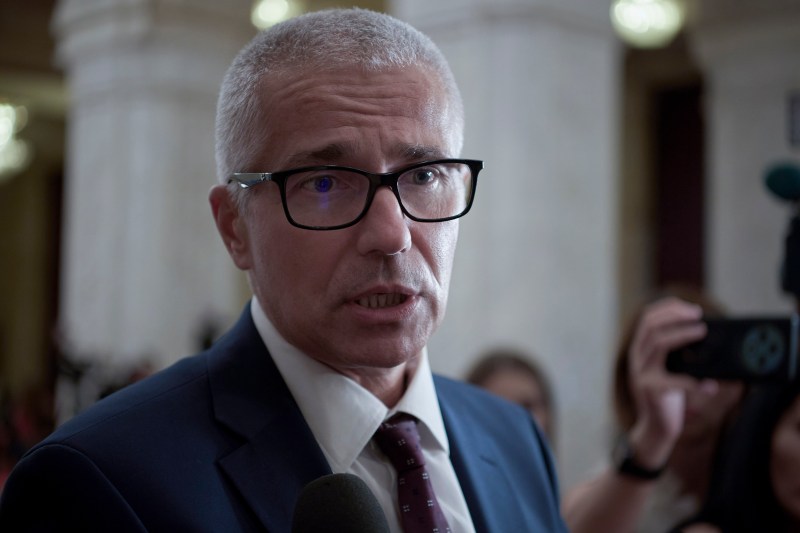
Radu Marinescu. Inquam Photos / Codrin Unici
Minister of Justice Radu Marinescu stated, on Digi24, that the reform of magistrates' pensions will not be possible through “social antagonisms”. Referring to the recent statement of Deputy Prime Minister Oana Gheorghiu, after which the money for special pensions is taken from other places, including from “the mouth of a hungry child”, the minister said that he is obliged not to lead the discussion “in a pathetic way”.
“The money is taken from somewhere, I don't know if it is taken from the mouths of children, but magistrates are not enemies of society, they are not people who should be condemned. If we no longer trust them, we no longer trust the rule of law,” said Radu Marinescu, when he was asked to comment on Oana Gheorghiiu's statement and the reply from judge Alin Ene, a member of the CSM.
The minister said that the pension reform must be done in such a way as to achieve the objective set in the government program, to reduce the retirement age, as well as to obtain the European money, which is conditioned by this reform.
“We will not be able to do this through social antagonisms”, Marinescu said, adding that, for now, the law for which the Bolojan government assumed responsibility was declared unconstitutional for extrinsic reasons, of form, and a new evaluation at the CCR, in which the content of the law would also be evaluated, is risky.
“I have the obligation not to turn things into a pathetic coordinate, but to be rational in order to achieve the result desired by society, let's take the European money, let's also have the benchmark of raising the retirement age”, believes the Minister of Justice.
Referring to the position of the party he belongs to, PSD, Marinescu said that the social democrats first of all want the reform to be carried out.
“Retirement at the age of 50 was not done by the PSD. The PSD wants to make reforms, but one that will produce effects, not hit the constitutional wall. For now, the law has hit it (…) I do not criticize the draft law, but I think that we had to find that working tool in which a form of balance would be reached that would lead to the finality of this law”, Marinescu also said.
Oana Gheorghiu, harshly criticized within the CSM
Deputy Prime Minister Oana Gheorghiu declared, on Saturday, on Digi 24, that Romania can no longer afford to have special pensioners, special pensions being, in her opinion, “a kind of Caritas”.
When asked how she would solve the problem of special pensions for magistrates, Oana Gheorghiu answered: “I would send a message to the magistrates – I would tell them that I understand them. It is very difficult to give up something that was given to you. (…) It is very difficult to benefit from this for years, decades and suddenly be told that you no longer have it. It would be difficult for anyone to do this. But I think this was a kind of Caritas. They were trapped in a Caritas, which could not last forever, and people who are pragmatic and rational should understand that. Romania cannot afford to pay this money, it cannot afford to have any more special pensioners. And if that money has to go to them, they can take it from somewhere and take it from the mouth of a child who goes to bed hungry.”
Judge Alin Ene, a member of the Superior Council of the Magistracy, stated, in a post on Facebook, that the statement of Deputy Prime Minister Oana Gheorghiu, according to which special pensions are “a kind of Caritas” that the Romanian state cannot afford, represents “an incitement to class hatred in the form of hatred”. The magistrate was also outraged by the statement made by Gheorghiu according to which the payment of these pensions is made with “money taken from the mouth of a hungry child”.
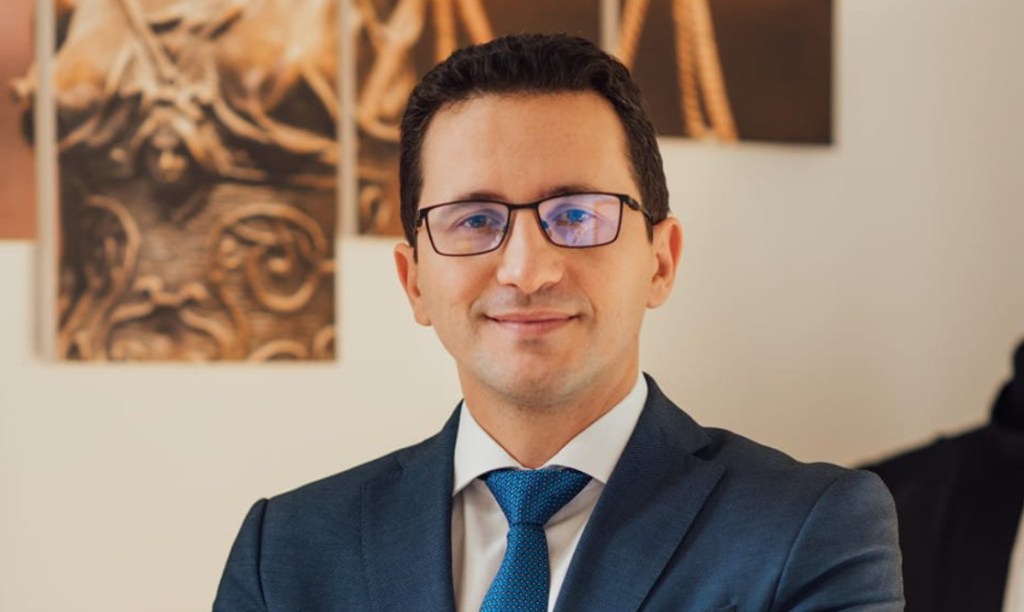 Harsh reply from the CSM after Oana Gheorghiu said that the special pension system is “a kind of Caritas”. “Just changing the packaging!”
He accuses Oana Gheorghiu of manipulation to the point where it turns into incitement against a social category.
“The artificial opposition between the magistrates and the 'hungry child' or the 'hospital without medicine' is unacceptable.” Building such an artificial opposition is not just cheap manipulation – it is a method of social antagonism, an invitation to collective resentment, an incitement to class hatred in its purest form, unworthy of the office of Deputy Prime Minister. It is a rhetoric of social division, historically used to identify “internal enemies” and to channel public resentment”, claims Alin Ene.