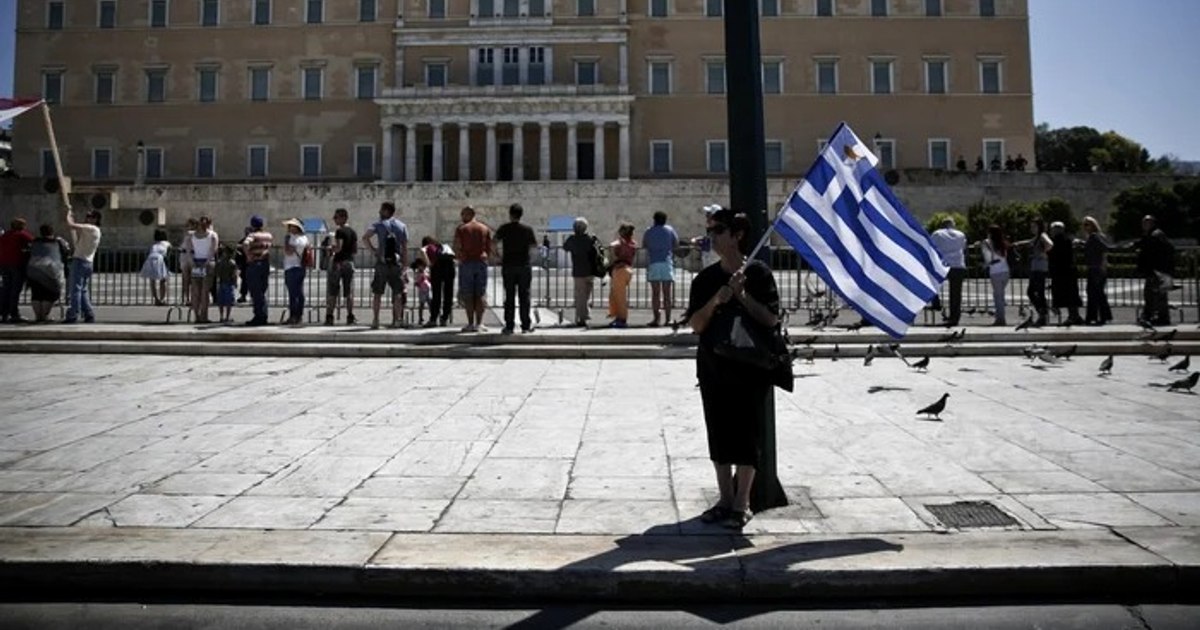
A 24 -hour national strike will paralyze Greece on Tuesday, while employees in the public and private sector protests against a controversial law that, if adopted, would allow 13 -hour work.
General strike in Greece Photo: Adevărul (archive)
This is the second national strike in so many weeks, while the unions intensify their struggle against the draft law, which they claim would abolish the eight -hour work, would destroy the balance between professional and personal life and institutionalize “Hyperexploatarea”writes Greek Reporter.
The Greek ships remained in the port, and the railway services were interrupted, after Tuesday the transport employees ceased work in protest against labor reforms, which include the extension of the work program in the private sector, also reports Reuters.
The strike, organized by the largest unions in the public and private sector in Greece, is scheduled to coincide with a debate in the Greek Parliament and a vote this week on the Government Law on Labor Reforms.
The workers on strike, including doctors from hospitals and journalists from the public media, are expected to march along with other protesters to the Parliament at noon, around the local time 12.
What provides for the draft law challenged by unions
The draft law allows employers to extend the work schedule, offers them more flexibility in short -term employment and changes the rules regarding the annual leave in the private sector.
The modification, which is now applicable to people who have two jobs, would extend to employees with a single job.
The Athens government claims that the draft law will create a more efficient and flexible work market and protect employees if it refuses to work overtime.
The unions, on the other hand, claim that the draft law damages the rights of the employees, eliminates the working day of eight hours and deprives them of the negotiation power in a country where the average lefs are still low compared to other countries in the European Union, despite the wage increases and the decrease of the unemployment after the financial crisis.
The purchasing power of the Greeks is among the lowest in the European Union, Eurostat data shows.
“Instead of stimulating workers' income and strengthening public services, the Government chooses to legislate the work for more employers and exhausting hours,” The main trade unions in the public and private sector in Greece, Adedy and Gsee said.
Why does the Greek government promote this model
According to Eurostat, the Greeks work on average 39.8 hours per week, compared to the EU average of 35.8 hours.
The government states that the reform will only apply for a maximum of 37 days a year, will give employees the chance to obtain 40% of the overtime and that it comes from employers and workers for a more flexible work market, writes Reuters.
The Greek Minister of Labor, Niki Kerameus, promotes this 13 -hour working program model, stressing that it can be an option for the employee, not an obligation, according to Paper Shift.
Last year, the Athens government caused a similar wave of indignation by introducing a six-day work week, a volunteer system for private tourism companies and other non-stop services, The Guardian notes.