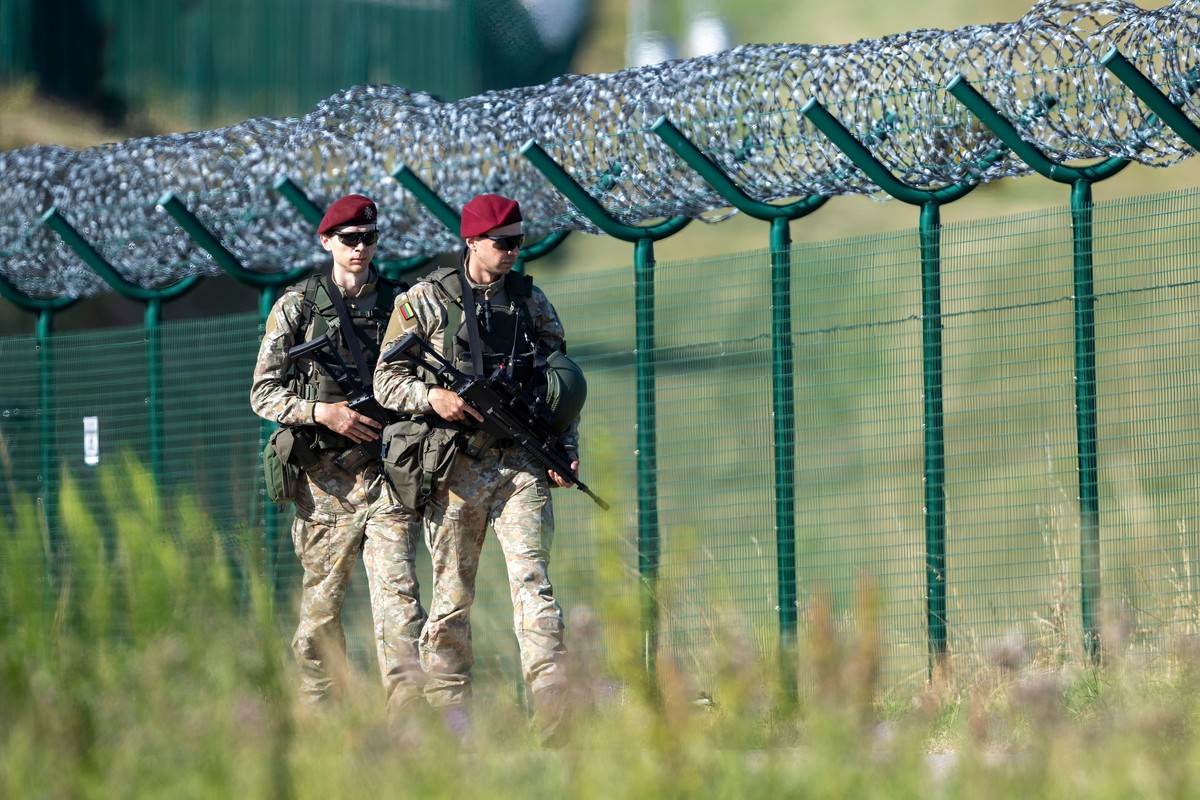
In May, the Baltic states agreed on cooperation in the field of civil defense. The plans being created provide for various scenarios – from a quick attack by Russian troops to sabotage, a mass influx of migrants or causing panic through disinformation.
Read also: Israeli forces withdraw from Gaza
Renatas Pozela, head of the Lithuanian fire brigade, noted that “it is possible that a powerful army will appear along the borders with the goal of occupying all three countries within three days to a week.” Other threats include sabotage of means of communication, social unrest among the Russian-speaking minority or mass flight caused by false information.
Baltic states and planned evacuation and preparations
In total, approximately 400,000 people are planned to be evacuated. people, i.e. half of the population living within a 40 km radius of the borders of Russia and Belarus. The city of Kaunas is preparing places for approximately 300,000. people in schools, universities, churches and the arena where Robbie Williams and Roger Waters recently performed. Similar actions are being taken in other cities.
Read also: Russian giants in trouble. They have to lay off employees
Assembly points have been designated in many places, trains and buses have been prepared, and supplies have been collected, including camping beds and toilet paper. People evacuated by car are to use secondary roads to enable the rapid movement of military forces. A map is now available showing cities where people can seek shelter.
Individual strategies of the Baltic states
Here are the specific plans that the Baltic states have developed:
- Lithuania: The evacuation will cover about half of the population in the border area. Foreign Minister Kestutis Budrys emphasized that the country is prepared: “We have done our homework.”
- Estonia: Shelters have been prepared for one-tenth of the population; the rest will find shelter with relatives. Particular attention was paid to the city of Narva, dominated by the Russian-speaking population. About two-thirds of residents could be evacuated, with assistance expected for half of them.
- Latvia: In the event of an attack, one third of the inhabitants would be evacuated, emphasizes Ivars Nakurts, deputy head of the emergency services.
None of the countries plans to evacuate citizens beyond their borders. The route through the Suwałki Isthmus – the strip of land wedged between Russia and Belarus separating Lithuania from Poland – will remain reserved for troops, as warned by Estonian evacuation adviser Ivar Maia.
Preparations in the Baltic countries show that although the immediate threat of war is unknown, states approach the security of citizens in a systematic and forward manner, developing detailed action plans in the event of an escalation of the conflict.