
2025-09-23 09:45
publication
2025-09-23 09:45
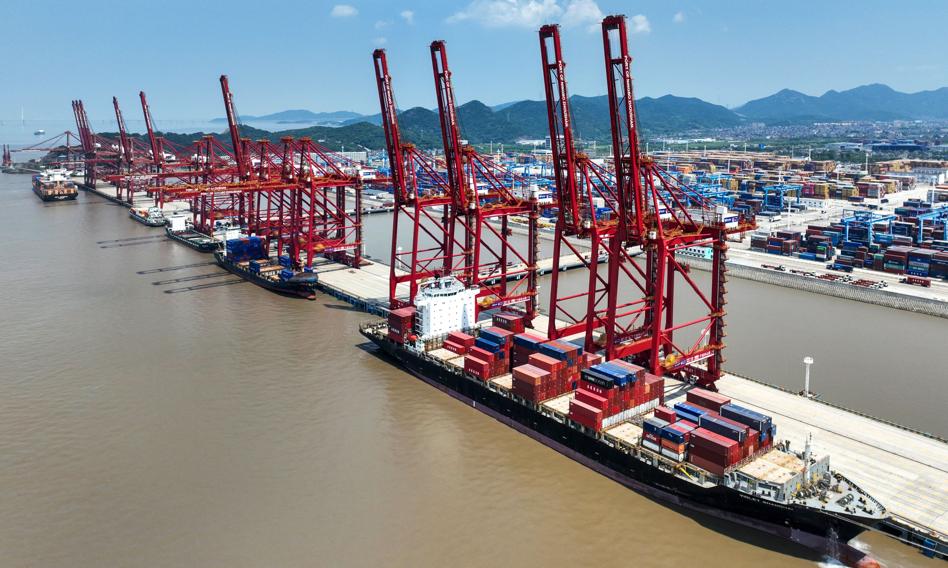
From the Ningbo port in the east of China, the first containerist settled on the Express route to Europe – said Yicai Global on Tuesday. The trail leading through the north-eastern crossing reduces transport time by more than half in relation to traditional routes and bypasses regions at risk of piracy and politically unstable.
The containerist journey, which sailed on Monday from the Ningo-Zhoushan port to the Felixst port in Great Britain, is to take Only 18 days.
As the Xinhua agency pointed out, it is much shorter than in the case of about 25 days of rail transport from China to Europe or traditional sea routes through the Suez Canal or around the Cape of Good Hope, which occupy about 40 and about 50 days, respectively.
The cruise route leads through the north-east crossing, i.e. the shipping trail running along the northern coast of Siberia through the Arctic Sea to Europe. This is the shortest maritime path connecting Europe with Eastern Asia.
The key advantage, next to time, is security – pointed out the government daily “Global Times”.
The shortening of travel time translates into a 30 % reduction of carbon dioxide emissions compared to the route through the Suez Canal and a 50 % reduction compared to the route through the Cape of Good Hope, which positively contributes to the mitigation of the effects of global warming.
The World's First China-Europe #Arctic Express Route is the Fastest Container Shipping Route Between China and European Base Base Ports, Including Ningbo, Shanghai, Qingdao and Dalian in China, and felixstowe in the #Uk, #Rotterdam In the Netherlands, Hamburg in #Germanyand … pic.twitter.com/axk7aszabj
– Global Times (@globaltimensnews) Seppember 22, 2025
The new trail, which is part of the polar Silk Trail initiative, bypasses political and economic regionsand avoids “the inconvenience caused by sudden incidents resulting from geopolitical conflicts,” said Jian Junbo, director of the China-Europa relations center at Fudan University.
“It is a route (…) developed especially for cross -border electronic trade and high -value goods,” noted the president of the sailing company Zhejiang Seaport Logistics Group, Sun Xuejun.
According to the “Global Times” data from Ningbo data, it shows that The European Union is currently the port's largest trade partner. During the first eight months this year. Trade turnover reached 330.74 billion yuan (approx. 46.5 billion dollars) and accounts for about 18 percent. the entire trade of the foreign port.
The Chinese media pointed out that the Arctic route connects the main Chinese ports, including Ningbo, Shanghai, Qingdao and Dalian, with key European ports, such as Felixstowe, as well as ports in Rotterdam, Hamburg and Gdańsk.
From Beijing Krzysztof Pawliszak (PAP)
KRP/ AKL/


